Notes
1 Roy Kozlovsky, “Adventure Playgrounds and Postwar Reconstruction,” in Designing Modern Childhood: History, Space and the Material Culture of Children, eds. Maria Gutman and Ning De Coninck-Smith (Rutgers University Press, 2008), 171.
2 Aldo Solano Rojas, Políticas del juego: arquitectura y diseño del espacio público en el México moderno (Laboratorio para la Ciudad, Buró-Buró, 2017), 10.
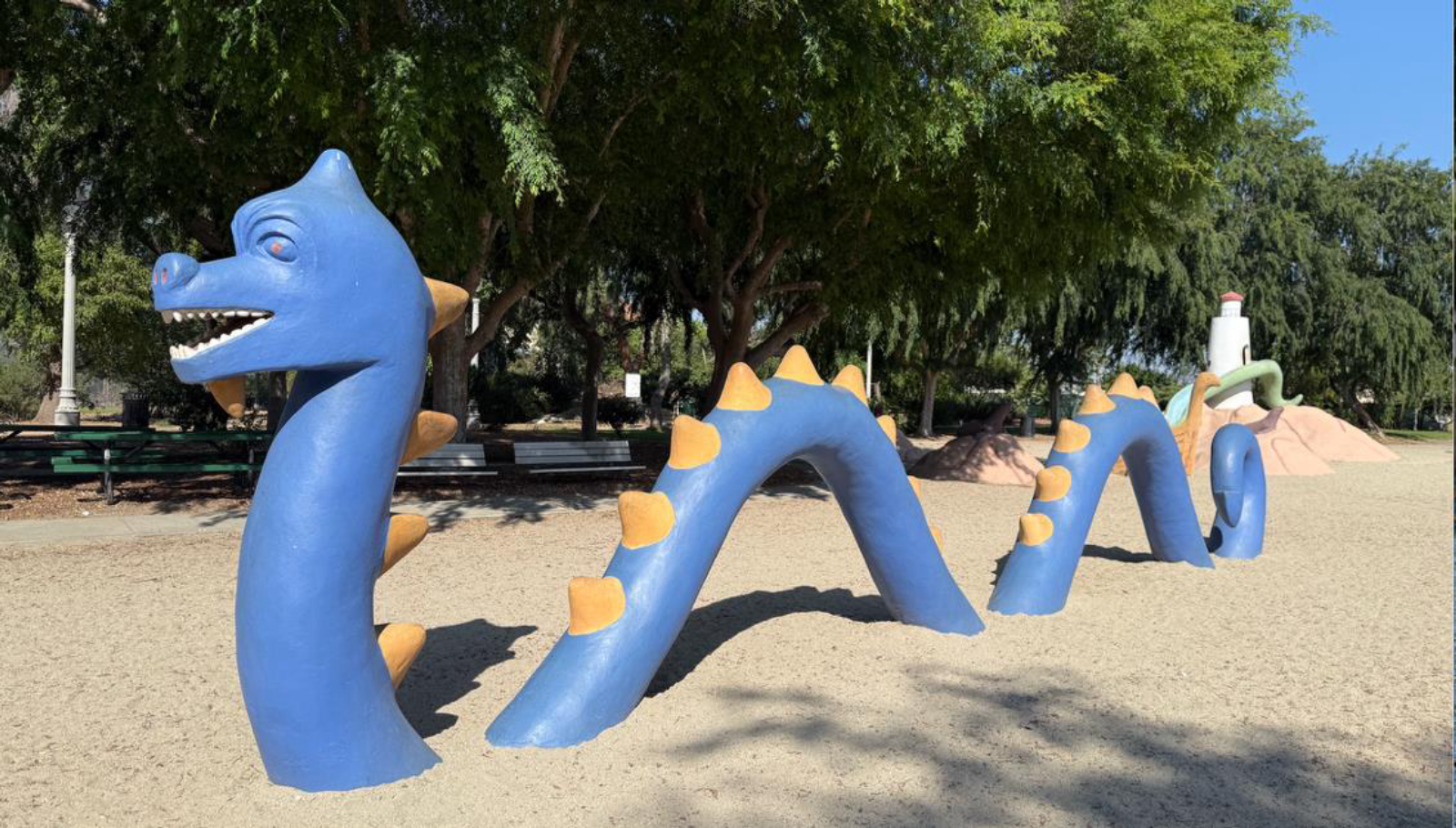
3 In the second volume of this special issue, art historian Erika Barbosa examines in depth the creation and eventual protection of La Laguna Playground in San Gabriel and the community activism behind the defense of this site, one of Domínguez’s most important works.
4 Eloy Zárate contacted the artist's family and digitized images from his archive, and spearheaded the effort to preserve and restore La Laguna Playground. Unless otherwise cited, biographical information is taken from Zárate’s Friends of La Laguna website: https://www.friendsoflalaguna.com (hereafter cited as Friends of La Laguna).
5 I could find no record of Domínguez’s attendance in the school’s archive.
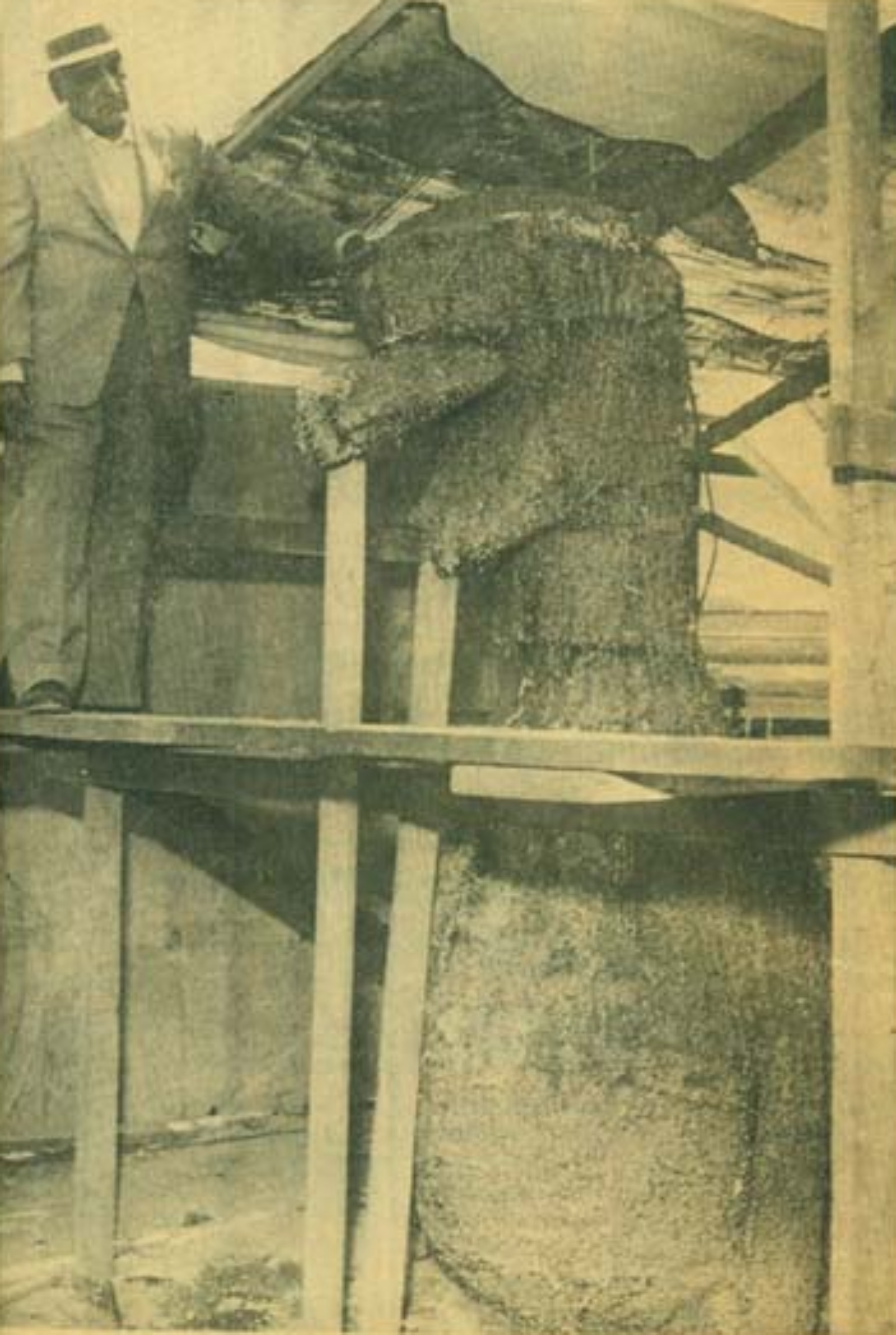
6 “Fantasy Park: Mexican Artist Designs A Land of Make Believe Here”, Las Vegas Review, undated clipping (c. 1959). Friends of La Laguna.
7 One of the leading exponents in the United States of faux bois was the Mexican-American Dionicio Rodríguez, who worked in San Antonio in the 1940s. See Patsy Pittman Light, Capturing Nature: The Cement Sculpture of Dionicio Rodríguez (Texas A&M University Press, 2014), 3-8.
8 See Amy F. Ogata, Designing the Creative Child: Playthings and Places in Midcentury America (University of Minnesota Press, 2013), 61.
9 The park was destroyed in the early 1990s. Friends of La Laguna.
10 See Gabriela Burkhalter, The Playground Project (JRP Springer, Kunsthalle Zürich, 2016), 138-43.
11 Garden Grove Historical Society, Garden Grove (Arcadia, 2005), 106.
12 Richard A. Santillan et al., Mexican American Baseball in the San Gabriel Valley (Arcadia, 2018), 28.
13 See Chris Strodder, The Disneyland Encyclopedia (Santa Barbara Press, 2017), 116.
14 Plaza de la Raza was founded in 1969 by Mexican American residents, led by actress Margo Albert and union activist Frank Lopez. In the early 1970s it became an important cultural hub, with an exhibition space and theater workshops. National Association of Latino Arts and Culture, Latino Arts and Cultural Organizations in the United States: A Historical Survey and Current Assessment (The Association, 1998), 65. See also https://www.plazadelaraza.org/history
15 See James Oles, “Reviving the Pre-Hispanic Past from Mexico to California,” in Found in Translation: Design in California and Mexico, 1915-1985, ed. Wendy Kaplan (Los Angeles County Museum of Art, 2018), 126-161; and Marjorie Ingle, The Mayan Revival Style (Gibbs M. Smith Inc., 1984).
16 It is again difficult to know his sources, but all of these ancient elements were widely-published and readily familiar.
17 In 1958, Pedro Ramírez Vázquez incorporated an original column from Tula in the Mexican Pavilion at in World’s Fair in Brussels; another was housed in his Museo Nacional de Antropología in Mexico City, which opened in 1964. They were also used as advertising markers for the Cruz Azul cement company.
18 Architect Edmundo Rodríguez designed pyramid-shaped play sculptures for Mexico City’s social housing projects in the early 1970s. See Aldo Solano Rojas, “Los muebles de concreto del arquitecto Edmundo Rodríguez”, Academia XXII 15, no 29 (junio-noviembre 2024): 121-43. Another, now destroyed, was built in the main plaza of Cholula, Puebla, close to the homonymous archaeological site.
19 I interviewed Stephen Sariñana, professional photographer and Lincoln Heights resident in June 2026. He generously shared images of the playground, as well as personal recollections.
20 Richard Dattner, Design for Play (The MIT Press, 1974), 103.
21 On the restoration and listing of La Laguna Playground see: https://www.laconservancy.org/learn/historic-places/la-laguna-de-san-gabriel/
22 In Whittier Narrows, for example, the city placed warning signs and in Atlantis authorities surrounded the sculptures with soft foam-like pavement.
23 Tomás Ybarra-Frausto, “Foreword”, Anne Elise Urrutia, Miraflores. San Antonio’s Mexican Garden of Memory, (San Antonio: Maverick Books, Trinity University Press, 2022), IX.
24 See Olivier Debroise, “Soy tu pasado; eres mi futuro: México-Los Ángeles,” in Mex/L.A. Mexican Modernism(s) in Los Angeles, 1930-1985, eds. Rubén Ortíz-Torres and Jesse Lerner (Museum of Latin American Art, 2012), 16-21; and Jennifer Josten, “Jet-Setters and Power Players. Cross-Border Design in the Postwar Era”, in Found in Translation, 296-300.
Author
Aldo Solano Rojas (b. Mexico City 1986) earned his MA in Art History in 2016 at the Universidad de Granada, and his PhD in Art History from the Facultad de Filosofía y Letras, UNAM, in 2023. He is the author of Playgrounds del México Moderno (Mexico City: Cubo Blanco, 2018). He has published essays on architecture and design history in a variety of journals. A member of the Mexican chapter of DOCOMOMO since 2024, he currently serves as an adjunct professor at the School of Architecture, UNAM.